Tanzania’s Blood Red Phenomenon
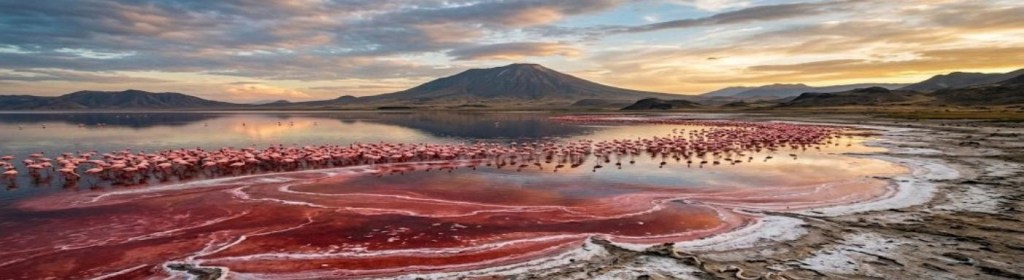
Dominated by the Maasai’s revered Mountain of God, the volcanic silhouette of Ol Doinyo Lengai, Lake Natron is the most northerly landmark of the Tanzanian Rift Valley and one of Tanzania’s most extraordinary landscapes.
This spectacular soda lake is a thrillingly primordial phenomenon. Lying beneath the towering escarpment in a landscape that can feel almost otherworldly, its caustic waters are enclosed by a crust of sodden grey volcanic ash and desiccated salt, broken by isolated patches of steamy, reed-lined swamp where the hot springs that sustain the lake bubble to the surface.
At first glance Natron can appear stark and unforgiving. Yet within this harsh landscape is a remarkable abundance of life. Rugged mountains rise from the plains, vultures soar on the thermals and baboons bark from rocky slopes. Dusty gorges wind through the landscape, while endless grasslands stretch towards the horizon where Maasai cattle graze beneath the relentless African sun.
The dry country is home to some of Tanzania’s more specialised wildlife, with gerenuk, lesser kudu and oryx among the species that can be encountered here. But it is the birds that truly make Lake Natron extraordinary.
Between August and October, the lake becomes a vast breeding ground for lesser flamingoes, with millions of birds gathering across its shallow waters. Their delicate pink forms create an extraordinary contrast against the lake’s mineral-rich, often vividly coloured surface, a landscape that is at once beautiful, brutal and utterly captivating.
Maasai Manyattas
Scattered across the surrounding plains are numerous Maasai manyattas. Villages of traditional houses made from sticks and clay arranged in protective circles around the cattle kraals, their weathered walls standing beneath the vast African sky.
Young children herd goats across the dusty plains, elders in brilliant red shúkàs sit beneath the acacias and the morani (warriors) keep watch, spears in hand, intricate beadwork around their necks and ochre woven through their hair.
It is a landscape where people, livestock and wildlife have shared the same harsh but beautiful environment for generations and where the extraordinary wilderness of Lake Natron feels as much a part of Maasai life as it does of Tanzania’s wild places.
When to Visit Lake Natron
Lake Natron changes character throughout the year and choosing when to visit depends largely on what you want to experience. The landscape can shift from stark and sun-baked to surprisingly green after the rains, while the lake itself becomes the stage for one of Tanzania’s most remarkable wildlife spectacles: the breeding of the lesser flamingo.
August to October — The Flamingo Season
For many visitors, August to October is the most spectacular time to experience Lake Natron. As the dry season reaches its peak vast numbers of lesser flamingoes gather on the lake to breed, turning the mineral-rich waters into an extraordinary sea of pink. One of East Africa’s most important breeding sites for the lesser flamingo the concentration of birds here can be breathtaking. With the lake’s vivid colours, the surrounding volcanic landscape and the towering presence of Ol Doinyo Lengai, it is a scene that feels almost surreal.
The dry conditions also make this a good time for exploring the surrounding wilderness. Wildlife gathers around the remaining water sources, while the clear skies and generally dry weather are ideal for walking, photography and experiencing the dramatic landscape.
November to December — The Short Rains
With the arrival of the short rains Lake Natron begins to change. Rainfall brings fresh life to the surrounding plains, washing the colour back into a landscape that can appear stark and dusty during the dry months.
The rains are also an important part of the flamingo breeding cycle. Eggs laid during the preceding months begin to hatch and the sight of young flamingoes alongside the adults adds another fascinating dimension to the lake’s wildlife.
For photographers, the changing landscape can be particularly rewarding, with fresh vegetation providing a striking contrast to the mineral-rich colours of the lake.
January to March — Landscapes & Wildlife
The beginning of the year can bring a very different character to Natron. Following the rains, the surrounding plains may be greener, while resident wildlife continues to make use of the area.
This period can also work particularly well for travellers combining Lake Natron with a wider northern Tanzania safari. The region offers a fascinating contrast to the more familiar landscapes of the Serengeti and Ngorongoro, with its volcanic scenery, Maasai communities and extraordinary birdlife.
April to May — The Long Rains
The long rains bring the greatest transformation of all to the landscape. The plains can become beautifully green and the air feels different from the intense dryness of the preceding months. However, this is also a time when conditions can be more unpredictable. Heavy rainfall can make some roads and tracks difficult and journeys through this remote region may take longer.
For adventurous travellers who don’t mind less predictable weather Natron at this time can offer a wonderfully quiet and atmospheric experience, with fewer visitors and a landscape bursting with life.
June to July — The Dry Season Returns
As the rains recede, the landscape gradually returns to its familiar dry-season character. The grasses become golden, the skies are often clear and the surrounding volcanic terrain once again takes on its stark, dramatic appearance.
Temperatures are generally more comfortable than during the hottest months, making this a good period for exploring on foot and combining a visit to Lake Natron with other destinations in northern Tanzania.
The great flamingo spectacle is still to come, however. As July progresses into August, increasing numbers of lesser flamingoes begin gathering on the lake.
So, when is the best time to visit Lake Natron?
If lesser flamingoes are your main reason for visiting, we would recommend August to October, when the lake can be transformed by enormous concentrations of breeding birds.
If your priority is experiencing Lake Natron as a whole, there is no single perfect month. The dry season offers clearer skies and easier conditions for exploring, while the rains bring a completely different landscape, with fresh greenery, changing wildlife and dramatic contrasts around the lake.
And that is perhaps what makes Lake Natron so fascinating. It is not simply a destination to visit and photograph. It is a living landscape that changes with the seasons and every season reveals a different side of Tanzania’s extraordinary Rift Valley.

